
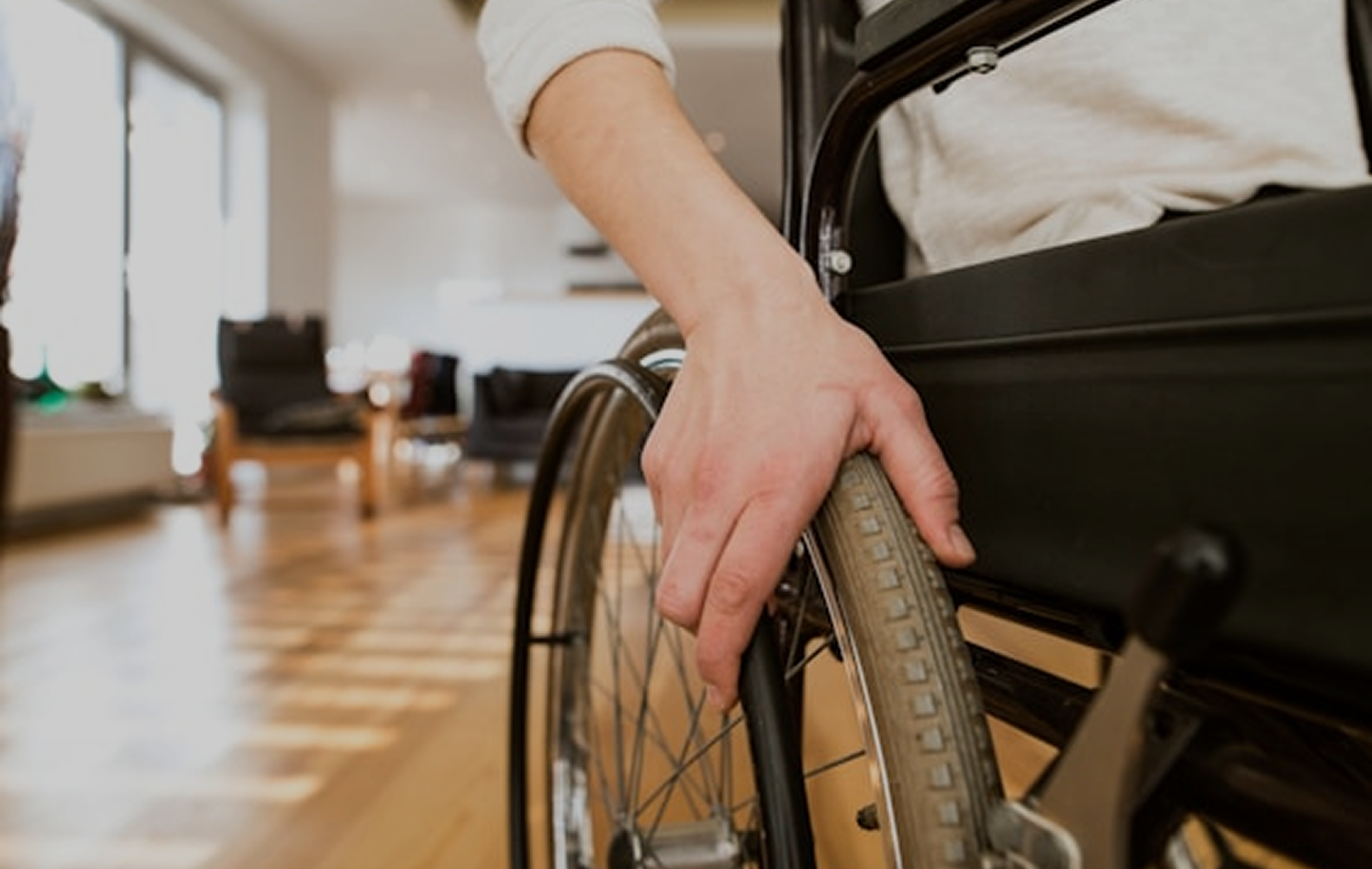
Special assistance
People with special needs
Having access to accessible air transport is a right for people with special needs and an obligation for airlines toward their customers. At LEVEL, in collaboration with Airport Operators in each country, we review our way of operating to facilitate your travel and provide solutions for every need, with the aim of offering you the safe and comfortable journey you rightfully deserve.
Aircraft accessibility.
Appropriate and specific means and procedures for each case.
Specialized staff with ongoing training processes.
Tips to prepare your trip
Plan your trip in advance and consider all your needs. You can contact us regarding any special service you may require.
Check whether you need to provide a report from your regular doctor or consult them. We recommend you do so if:
You suffer from or have recently suffered from a temporary or chronic illness related to cardiovascular or respiratory problems, severe anemia, unstable diabetes, or cancer.
You are taking immunosuppressive medication or, for any health reason, there are doubts about your current health condition for traveling.
Check whether you need to travel with a companion who, in addition to the crew, can assist in your evacuation in the event of a hypothetical emergency situation.
Depending on the particular assistance and care needs required in each case, it may be necessary for a person to accompany you throughout the itinerary and, in very specific cases, that this person be healthcare personnel with the training and ability to assess your health status at all times, administer medication, or provide necessary medical care.
In general, it is mandatory to travel with a companion when assistance is needed to perform any of the following actions:
Reach an emergency exit
Communicate in any way with the crew regarding safety matters
Fasten or unfasten the seat belt
Perform basic physiological needs
Retrieve and put on the life vest or oxygen mask
The chosen companion, except in special cases, must be at least 18 years old and fully autonomous.
If you have a cast, on flights longer than two hours, the cast must have been fitted for at least 48 hours or be opened longitudinally.
Check if you:
Need medical authorization
Need a report with a medical statement
Must travel accompanied
Consult our help center for any questions
During booking
We recommend requesting special assistance at least 48 hours in advance of your flight departure to ensure everything is ready upon your arrival.
Make sure there is enough time between the arrival and departure of your connecting flights. As a general rule, we suggest leaving at least one and a half hours between flights to ensure your connection and provide maximum peace of mind throughout your journey.
At the airport
Please note that with the implementation of European Union Regulation 1107/2006, ground assistance for Passengers with Reduced Mobility has become the responsibility of Airport Operators or their delegated agents. Therefore, airlines need minimum time to communicate our customers’ needs to the service agents.
Airport operators will provide the necessary assistance, facilitating your transit through the airport and helping with your procedures, including check-in with us, where we will be waiting to offer differentiated and priority boarding.
Before traveling, we recommend that you inform yourself about the accessibility conditions of the airports you will be traveling through, as well as the minimum check-in times established by the respective Operator.
As a general rule, we recommend arriving at the airport two hours before the scheduled departure time of your flight. Your boarding will be prioritized.
If you want to learn more about the information offered by AENA (Spanish Airports and Air Navigation), you can view this file:
Assistance information for people with reduced mobility by AENA
On board
Our fleet is adapted for transporting people with special needs and aircraft are prepared to allow the most versatile forms of boarding and disembarking: remote, via jet bridge, using a lift, or ambulift.
Seats with foldable armrests located in the aisles.
On-board wheelchair: An on-board wheelchair is available to facilitate movement within the aircraft for passengers who need it.
Accessible lavatories: Our aircraft have adapted and more spacious lavatories, serving the comfort and independence of people with special needs. Ask our crew about their location and request assistance to and from your seat if needed.
For safety reasons, you will not be able to occupy an emergency exit seat or an XL seat.
Upon arrival
If your trip ends at an airport within the European Union and you requested wheelchair transfer or accompaniment in advance, upon arrival of the aircraft, the service provider will have received the information with your name, flight number, and arrival time along with the assistance to be provided.
Outside the EU, our staff will provide the transfer or accompaniment assistance you need.
The transfer and accompaniment service includes baggage collection.
Transport of wheelchairs and assistance equipment
Our policy is to try to place wheelchairs, assistance equipment, and mobility aids in the containers or closets on board, but there are limitations on size and quantity that can be transported. If we cannot transport them on board, we will transport them in the aircraft hold.
Below are the maximum dimensions of these onboard containers:
Fleet | Length | Width | Height |
A330-200 | 91.44 cm (36in) | 33.02 cm (13in) | 106.60 cm (42in) |
Special services for people with special needs
Transfers and accompaniment at airports. Transit through airports sometimes involves walking long distances or navigating unfamiliar facilities, which can be exhausting and/or disorienting.
This situation may especially affect those with mobility issues, physical disabilities – visual impairment, for example – intellectual disabilities, memory-related illnesses, or simply elderly people.
To break this barrier, airports provide transfer and accompaniment services from the terminal entrance to the aircraft seat, including check-in, boarding, and baggage drop-off and collection.
In the European Union, since the implementation of Regulation EC 1107/2006, this service is provided by airport operators. Outside the EU, airlines are responsible for providing it to their customers. Wherever it is, it is always free of charge.
Free transport of assistance and mobility equipment. In addition to your baggage allowance, we transport free of charge the mobility and assistance equipment you require – wheelchairs, crutches, walkers – as well as medical equipment and medications you usually need for up to two days at destination.
Thus, for example, in addition to your luggage, you can travel with:
Dialysis equipment not exceeding 50 kg in weight.
Up to two mobility devices: wheelchair, walker…
Respiratory devices, CPAP, oxygen concentrators.
We have designed our operations so that people who require wheelchairs for mobility have comfortable access to boarding and receive them as quickly as possible.
Wheelchair transport. Assembly and disassembly. Preparing a wheelchair for travel is sometimes complex, and the difficulty of assembly or disassembly varies depending on the type of wheelchair you use:
Manual wheelchairs: in most airports you can keep your own wheelchair until reaching the aircraft, where it will be collected to prepare it for transport.
Electric wheelchairs: due to the preparation required for this type of wheelchair and battery characteristics, in accordance with current regulations, you must submit the transport request at least 48 hours before the flight.
Wet cell batteries (spillable): it is necessary to remove the battery terminal connections to isolate and protect them.
Dry cell batteries (non-spillable): in this type of wheelchair, the battery may remain installed if it is securely attached. There is also no need to disconnect the terminals if they are insulated and the switch is in the off position.
If you also provide a copy of the manufacturer’s instructions, it will be valuable assistance for our work and allow us to be more efficient with minimal risk.
Priority baggage delivery. Delivery of checked mobility and assistance equipment takes priority over other checked baggage on the flight. However, if any incident occurs, we will immediately replace it with another device of similar characteristics until it is fully resolved.
Special meals and food allergies: You can request different types of meals for your flight. If you are allergic to a particular food, we recommend that you contact us, as we cannot guarantee its complete absence from meals or that another food has not been exposed to the product to which you are allergic during the production process.
International regulations on transport of people with reduced mobility
ANNEX (PRM)
The purpose of this document is to improve accessibility to air transport for people with reduced mobility. It is aimed at airlines providing services and facilities at airports and on aircraft and serves as the basis for developing a voluntary Code (or Codes) of Conduct. When Codes are developed, appropriate provisions of Document 30 (Section 5) of the European Civil Aviation Conference (ECAC) and Annex 9 of the International Civil Aviation Organization (ICAO) will be taken into account. These documents provide technical information and have been drafted following consultation with the air transport industry and governmental bodies responsible for establishing standards and recommended practices.
Definition
A person with reduced mobility (PRM) is any person whose mobility is reduced due to any physical disability (sensory or locomotor), intellectual impairment, age, or any other cause of disability when using a means of transport and whose situation requires special attention and the adaptation of services made available to all passengers to that person’s needs.
Basic Principles
PRMs have the same rights to freedom of movement and freedom of choice as any other citizen. This applies to air travel as well as all other situations in life.
It is the responsibility of airlines, airports, and service agents related to both to meet the needs of PRMs. Likewise, it is the responsibility of PRMs to specify their needs through appropriate channels at the appropriate time.
Necessary information must be provided so PRMs can plan and make their journeys.
The costs derived from attending to PRMs must not be directly passed on to them.
Disability and illness must not be equated and, therefore, PRMs must not be required to make medical declarations about their disabilities as a precondition for travel.
Organizations representing PRMs will be consulted on matters related to their care.
Staff will be provided with appropriate training to understand and meet the needs of PRMs.
Security checks will be carried out in a manner that respects the dignity of PRMs.
PRMs must be allowed the greatest possible degree of independence.
Airline Practices
No carrier will refuse to transport a PRM except when they cannot be transported safely, cannot be physically accommodated, or cannot be provided with the specific services they need during the flight. When transport of a PRM is denied, airlines will clearly and explicitly explain the reasons for the denial.
PRMs who are not self-sufficient must always travel with a companion. The airline does not provide medical, hygienic, or safety assistance on board. For more information, consult Reservations.
Airlines will seek technical and operational options to improve access and facilities on aircraft of all sizes, especially when major refurbishment tasks are undertaken.
In cases where a direct route is not possible for a PRM (for example, due to the small size of the aircraft), airlines will strive to propose an acceptable alternative.
Regardless of the size of the airport or aircraft, the dignity of PRMs must be respected in boarding and disembarkation formalities.
Airlines will provide adapted facilities on board, where space permits, to facilitate PRM autonomy within sanitary, hygienic, and safety limits.
PRMs will have equal access to seating assignment options, subject to safety requirements. Airlines will clearly and explicitly explain the reasons for not assigning a specific seat when the request cannot be met for safety reasons.
Guide dogs will be transported in the cabin in accordance with airline and national import regulations. When transported, no charge will be made. PRMs will not be charged for transporting basic objects that facilitate mobility or other essential auxiliary elements in case of disability.
Airlines must take all reasonably possible measures to avoid loss or damage to objects that facilitate mobility or other auxiliary elements in cases of disability. When such loss or damage occurs, airlines will take appropriate measures to meet immediate individual mobility needs.
Access to air transport for people with disabilities
Text of European Regulation 1107/2006: www.eur-lex.europa.eu / technical documentation / disability and travel / legislative acts / 32006R1107
You can request a copy of regulation 14CFR Part 382 from the United States Department of Transportation by:
Phone call
Calls within the USA: direct and toll-free call for people with disabilities through the number 1-800-778-4838, or the integrated TTY* number 1-800-455-9880.
Calls from outside the USA: contact the Aviation Consumer Protection Division at (+1) 202-366-2220, or the integrated TTY* number (+1) 202-366-0511.
By postal mail
Aviation Consumer Protection Division
C-75, US Department of Transportation
1200 New Jersey Ave., SE
West Building, Room W96-432
Washington, DC 20590
Online
Through the official Department of Transportation website at the following link: www.transportation.gov/airconsumer.